Showing posts with label the Good Shepherd. Show all posts

Thursday, March 08, 2012

A few quick thoughts on shepherding

Aren't we all called to be Christ-like?

Isn't Christ the Great Shepherd?

So shouldn't we all be about the business of shepherding as we seek to imitate Him?

Imitating the Great Shepherd is the call of every single Christian, without distinction and without exception. Walking as He walked, acting as He acted, loving as He does. Not every Christian is equipped for that yet but really that is primarily what elders should be doing, equipping others for that work by providing an replicable example. Shepherding is not dictating. It is not weekly lecturing from a pulpit. It is not "vision casting". It is serving and if every Christian isn't called to that, what exactly are we called to?

Friday, June 11, 2010

Even more thoughts on shepherding: 1 Peter 5

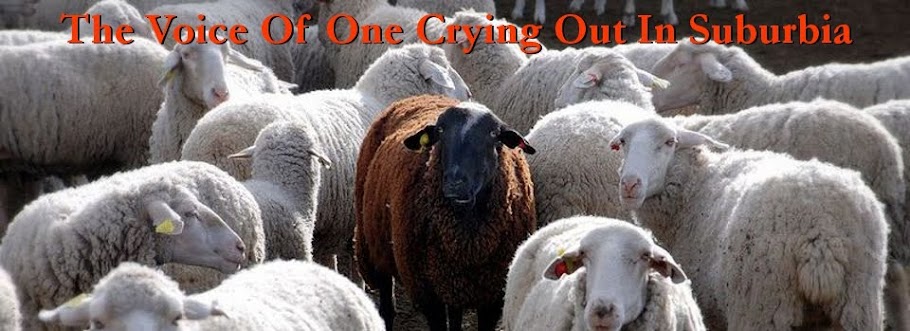
Kind of an odd picture but I will come back to it near the end. In 1 Peter 5 we see the shepherding function directly referred to elders in the church. It is an interesting passage because while most epistles to the church are directed to the church as a whole, and conspicuously not just leaders/elders/pastors, Peter specifically is addressing a subset of the church. This is a commonly referenced set of verses so I want to look specifically at verses 1-5 to see what they tell us about shepherding:

So I exhort the elders among you, as a fellow elder and a witness of the sufferings of Christ, as well as a partaker in the glory that is going to be revealed: shepherd the flock of God that is among you, exercising oversight, not under compulsion, but willingly, as God would have you; not for shameful gain, but eagerly; not domineering over those in your charge, but being examples to the flock. And when the chief Shepherd appears, you will receive the unfading crown of glory. Likewise, you who are younger, be subject to the elders. Clothe yourselves, all of you, with humility toward one another, for “God opposes the proud but gives grace to the humble.” (1 Peter 5: 1-5)

Now at the onset I would point out that shepherding, as everyone knows, is hardly a glamorous profession. Shepherds didn’t have sheepskins from Sheep-Keeper Seminary (pun intended). They were, from my understanding, not the pillars of the community or terribly respected. They were just dudes who hung around with sheep and kept them from harm.

So what specifically is Peter exhorting his fellow elders to focus on in regards to shepherding?

- Exercise oversight

- Do so willingly, not under compulsion

- Not for personal gain

- Not with an attitude of domineering but through example

Missing from this list is what we traditionally expect from pastors. There is no talk of sermons or vision casting or counseling or budget committees. There is a serious disconnect between the Biblical description of shepherding and what we expect from shepherds/pastors. We expect them to lead and we will follow. They teach, we learn. They minister, we are ministered to. They rule, we submit. That all is fine and dandy but it is not shepherding.

Shepherding in God’s church does not come by dispensing nuggets of knowledge in 40 minute chunks during a sermon or by creating a “vision” that others are obligated to follow. It comes by sacrificial service to the Body and lives that should be emulated by others. We are called to imitate their example, not simply extol their virtues. Oversight, leadership, pastoring, shepherding are all less about ruling and control than they are about edification and self-sacrifice. When the Great Shepherd walked the earth, His ministry included a great deal of teaching but it also included modeling of service. In Matthew 20:20-28 we see Christ describing greatness as resulting from service, that even He came not to be served but to serve. Christ extolled the virtues of the humble and chastised those who sought personal recognition. Christ later lived this out in a most unbecoming act, stooping down at the feet of His disciples, the King of the Universe washing the dirty feet of His creatures. Service and holding others as more important than yourself are the hallmarks of shepherding and that sort of behavior is nowhere restricted to a special class of Christians. In other words, shepherding through leadership and service is a function of all Christians. It may manifest itself differently in different Christians but it shouldn’t be absent in any follower of Christ.

This brings me back to my original question. Is shepherding an office in the church or is it used to describe Christians who shepherd others in the church? It seems pretty clear that what is being described in the Bible is more functional than official, more serving than ruling.

Ultimately the most important thing to remember about shepherding is that pastors, elders, evangelists, shepherds in other words, are first and foremost sheep. They are not “under-shepherds” with some sheep like qualities; they are 100% sheep that are called on to perform some shepherding functions. That is an important distinction.

My point is that shepherding can only be correctly understood when we recognize Jesus as the Shepherd and ourselves, even the most famous pastors, as sheep. We may perform some shepherding functions but when we lose sight of Christ as the Shepherd and the only Shepherd of the church, we get into trouble. The two thousand year history of Christianity is littered with men who sought to supplant Christ as Shepherd and every time it led to heresy and error. Pope after pope proves this, not to mention cult leaders like Joseph Smith, David Koresh, Jim Jones and on and on.

So about that picture. Some years ago when we lived in Northern Michigan we had a short lived experiment with raising sheep. During this experiment we learned a lot about sheep, especially concerning the metaphor of Christians as sheep in the Bible and how that wasn’t really complimentary. The sheep in the middle of the picture is Cortland and she was the “lead sheep” in our little four sheep flock. Here is where this is pertinent. Cortland, even though she was the lead sheep and the one others would follow, would often wander off. The others would follow right behind her until they were at the neighbors farm or way down the road. You see, she might have been the leader but she was still just a sheep. The danger of sheep being reliant on other sheep to lead them is that sheep are…sheep. That is why we have a Good Shepherd and why we who are His sheep hear His voice and follow Him. We all know all too well how fallible men are but if we follow the Good Shepherd He will never lead us astray.

Monday, June 07, 2010

Flock membership precedes belief

I am struck repeatedly by the Good Shepherd discourse in John 10 and what it says about a question that so many people wrestle with. When it comes to evangelism, why do so few people believe even when they hear the same Gospel presentation? Free will doesn’t explain it because all unregenerate people are in the same boat, dead in trespasses and sins (Eph 2: 1-3). Why then do some believe and not others? Jesus answers this question very clearly in this pivotal chapter of John’s Gospel record…

I am the good shepherd. I know my own and my own know me, just as the Father knows me and I know the Father; and I lay down my life for the sheep. And I have other sheep that are not of this fold. I must bring them also, and they will listen to my voice. So there will be one flock, one shepherd. (John 10: 14-16)

Jesus answered them, “I told you, and you do not believe. The works that I do in my Father's name bear witness about me, but you do not believe because you are not part of my flock. (John 10: 25-26)


To summarize...

- You are not part of the flock because you believe, you believe because you are part of His flock.

- People are not outside of His flock because they don’t believe, they don’t believe because they are not part of His flock.

- When someone who is part of the flock, those God the Father has given to the Son, hears the Gospel proclamation at the appointed time, they believe it.

This seems so straightforward. The Pharisees didn’t believe because they were not part of His flock. We who do believe do so because we are part of the flock. We were given by the Father to the Son (John 10: 29) to be part of His flock, all of those given to the Son by the Father will hear His voice, all will come to Him and none will be lost. As clear as this is, it is the source of so much confusion for people. Scripture and plain old common sense tell us that dead sinners don’t respond unless acted on first by an outside source but the majority report in evangelicalism is focused on us choosing God of our own volition. Little wonder that evangelism is so muddled in the church.

This does not negate our need to preach the Gospel to all people everywhere. One of His sheep doesn’t look much different from someone who is not His sheep. In fact, to our sinful eyes it sometimes might seem that some people look more like His sheep to us than those who really are because of our biases. It is often the unlovely, the poor, the unwise who are His sheep instead of the respectable, well-educated and wealthy. This knowledge does (or should) give us boldness because we know that those who are the sheep of His flock will believe the Word. It is not up to us through clever arguments or impassioned sermons or evangelistic methods. His sheep hear His voice and follow Him. If someone rejects the message, it is not because of you, it is because they are not His sheep.

I for one am glad that my status as one of His sheep was not left up to me.

Thursday, May 20, 2010

Thinking about shepherding

We know from many, many places in the Scriptures that Jesus Christ is the Good Shepherd (John 10: 1-16), the Shepherd of our souls (1 Peter 2:25), the Lamb of God who is also the Shepherd of His sheep (Rev 7:17). We also see some places in Scripture where shepherding is spoken of in regards to people. We see reference to elders in a shepherding role (1 Peter 5:1-2), we see shepherding as a function in the church (Ephesians 4:11) and we see Jesus exhorting Peter three times to shepherd believers even before the crucifixion (John 21: 15-17). The imagery is mixed and confusing in some ways. Jesus is the Shepherd but He is also the Lamb. We are His sheep but we are also called to shepherding.

This whole topic of shepherds, shepherding and sheep raises some questions in my mind:

Is shepherding an office or a function?

Is shepherding reserved to a select few in the church or is it the responsibility of all Christians?

Is shepherding the same thing as pastoral ministry in a traditional church?

I have some thoughts on these questions but I wanted to throw them out there. In the life of the church, how should we view shepherding?


Bookmark and Share

Wednesday, September 30, 2009

The Shepherd and His sheep


I am the good shepherd. The good shepherd lays down his life for the sheep. He who is a hired hand and not a shepherd, who does not own the sheep, sees the wolf coming and leaves the sheep and flees, and the wolf snatches them and scatters them. He flees because he is a hired hand and cares nothing for the sheep. I am the good shepherd. I know my own and my own know me, just as the Father knows me and I know the Father; and I lay down my life for the sheep. And I have other sheep that are not of this fold. I must bring them also, and they will listen to my voice. So there will be one flock, one shepherd. (John 10: 11-16)

I love the Good Shepherd discourse. You could spend years studying and unpacking what is going on here. One of the main points of the Good Shepherd discourse is that God recognized that we couldn't be trusted to shepherd ourselves! Sheep don’t lead sheep. We used to own sheep and the smartest of our sheep was still dumb as a stump. The problem, as is so often the case, is that what we see in the Bible is not what we see in the church. The picture we are given in the Bible is of one Shepherd leading one flock. The reality we live in is of many, many flocks led by many "undershepherds" all going in different directions. In spite of their good intentions, sheep have their own motivations and they are rarely the same as the shepherd.

I have been thinking about John 10 a lot over the last couple of days. What got me thinking about this was something I read on Facebook from Ligonier, written by Tom Ascol (a man I respect enormously). The article, “A Solemn Discharge of Duty”, is about properly “firing” a pastor. I have more to say about that in an upcoming post, believe me! But one thing really jumped out at me, not because it was unusual but just the opposite: it is such a commonplace idea in the church that it often gets stated without challenge. Here is what he wrote:

The relationship between churches and pastors is vitally important because Christ has ordained that His sheep are cared for by qualified, called, and equipped undershepherds. The dissolution of that relationship should never be regarded lightly or pursued haphazardly.

It concerns me when men consider themselves to be “undershepherds” and the local gathering of the church to be their flock. The man who is your minister is a sheep, just like you. Whether he is paid or not, whether he has a seminary degree or not, no matter what title you give him, he is a sheep the same as you. When you lift yourself up as something more than your fellow believer, that is a problem. You can dress it up in all sorts of religiously approved humble language, but when push comes to shove when you consider yourself an “undershepherd” you have lifted yourself above the rest of the Body. You have a special calling, special authority, special responsibilities. You may affirm in theory that we are all one and the same, but in practice there is a division among the sheep and that division is not healthy.

We don’t see this sort of separation in the New Testament even among those who were apostles and the local pastor of First Baptist Church of Hindquarters, Alabama is not an apostle. Even in Acts 15 at the Jerusalem council we see the elders and apostles all gathered together and they came to a consensus and that was an issue of the Gospel, not a minor quibble about the organization of the local church.

There is one place where you can sort of see the genesis of this idea, when Jesus is speaking in John 21 to Peter asking him three times if he loved Jesus. Three times He asks Peter if he loves Him, and three times Peter says yes. In response, Jesus tells Peter to tend His flock, feed His sheep, tend to His lambs. In the NASB it reads:

He said to him again a second time, "Simon, son of John, do you love Me?" He said to Him, "Yes, Lord; You know that I love You." He said to him, "Shepherd My sheep." (John 21:16)

I fear that from that we have created a role for men to be shepherds in place of Christ. But notice that it is an action, shepherd as a verb, and that Christ is clear that these are His sheep, we are His flock. Later it is Peter again who writes of shepherding the flock of Christ, but agains as a verb, not as an office:

So I exhort the elders among you, as a fellow elder and a witness of the sufferings of Christ, as well as a partaker in the glory that is going to be revealed: shepherd the flock of God that is among you, exercising oversight, not under compulsion, but willingly, as God would have you; not for shameful gain, but eagerly; not domineering over those in your charge, but being examples to the flock. (1 Peter 5: 1-3)

“Shepherd” is not an office of the church that men hold. There is but one Shepherd in the church of Christ. We have One who is our Shepherd, we have One who is our great High Priest, there is one Body with only one Head. Human shepherds have failed again and again. In Ezekiel 34: 1-10 God rebukes in the harshest possible terms the shepherds who were supposed to be leading Israel and in the next verses made a glorious promise to His people:

“For thus says the Lord God: Behold, I, I myself will search for my sheep and will seek them out. As a shepherd seeks out his flock when he is among his sheep that have been scattered, so will I seek out my sheep, and I will rescue them from all places where they have been scattered on a day of clouds and thick darkness. And I will bring them out from the peoples and gather them from the countries, and will bring them into their own land. And I will feed them on the mountains of Israel, by the ravines, and in all the inhabited places of the country. I will feed them with good pasture, and on the mountain heights of Israel shall be their grazing land. There they shall lie down in good grazing land, and on rich pasture they shall feed on the mountains of Israel. I myself will be the shepherd of my sheep, and I myself will make them lie down, declares the Lord God. I will seek the lost, and I will bring back the strayed, and I will bind up the injured, and I will strengthen the weak, and the fat and the strong I will destroy. I will feed them in justice. (Eze 34: 11-16)

Notice how often God refers to Himself: I will feed them, I will rescue them, I will seek them out, I will be the shepherd of my sheep. If you have a flock of sheep, you don’t send them out into a pasture and tell the smartest sheep in the flock that he is in charge. You send them out under a shepherd. Christ is the Great Shepherd who leads the flock, guides the flock, protects the flock. He is the shepherd we need to depend upon.

Now I don’t think that too many ministers think that they are the real shepherd of the flock but I do think that using terminology like “undershepherd” to refer to a cleric and “flock” to refer to a local gathering is a dangerous precedent that creates in the mind of the minister and in the greater body a division between one Christian and another based on an alleged office in the church. No less harmful is the idea that this local church is one flock and that local church is a different flock. There is only one flock of Christians. There is no doubt in my mind that men should be recognized as elders and that those men should willingly and freely lead the church. There is also no doubt in my mind that in exalting men, giving them special privileges and deference we do harm to the work of the Gospel. We are called to be fellow laborers (more on this in my next post), not a corporation. The hierarchy in the church is pretty simple. You don’t need a class on ecclesiology or org charts to figure it out. It is Christ and then every Christian. We are all His sheep and He is our shepherd. There is no other and we need no other.


Bookmark and Share


Tuesday, April 07, 2009

The cross of Christ and John 10


There is a lot of chatter this week leading up to Easter Sunday. When conversation turns to the cross of Christ, confusion often ensues. I want to work out some of the surrounding issues of the cross, what it did (or did not) accomplish, what it means for the believer. So over the course of this week, I plan on posting a number of thoughts about the cross and what that cross means to the believer.

The first place I want to look is at the Good Shepherd discourse of John 10. In John 10 Jesus speaks in some depth of Himself as the Good Shepherd, about those who are His sheep and those who are not (and why some are His sheep and some are not), and what He would be doing for His sheep at the cross.

What is the key theme from John 10? Jesus knows His sheep and His sheep know Him and He lays down His life for the sheep. What makes someone one of His sheep? Is it that we chose to be one of His sheep? Or is it that we were His sheep because He chose us? That really gets to the question of why some believe and some do not when they hear the Gospel. That question is one that is confounding to those who reject sovereign grace. Read what Jesus says in John 10: 24-27:

24 So the Jews gathered around him and said to him, “How long will you keep us in suspense? If you are the Christ, tell us plainly.” 25 Jesus answered them, “I told you, and you do not believe. The works that I do in my Father's name bear witness about me, 26 but you do not believe because you are not part of my flock. 27 My sheep hear my voice, and I know them, and they follow me.

In other words, because we are His sheep we hear His voice, not the converse that we are His sheep because we hear His voice. Those who hear the Gospel and reject it, who do not believe, do not believe not because of how clever the presentation is or because someone didn’t lead them in a prayer. Those who reject the Word reject it because they are not part of Christ’s flock. I would say that you could (and should) preach the Gospel to someone who is not one of His sheep until you are blue in the face and they will never believe because they are not of His flock. Conversely, His sheep hear His voice and follow Him. Christian, the only difference between you and that guy over there bound for hell is that the Father gave you to the Son as part of His flock and because of the working of the Holy Spirit in your rebellious, God-hating heart you heard His voice and followed Him. You and I are nothing but sheep, prone to wander, kind of dumb, and we have no basis for bragging about being saved because we had nothing to do with being saved. If I had chosen to follow Christ without the intervention of God, then I have something to brag about: I was smarter or more righteous or whatever than that guy and I chose Jesus. But that is not what it is about, you were chosen as one of His flock not because of who you were but in spite of who you are.

So what does that have to do with the cross? Well, elsewhere in John 10: 14-17 we see who Christ laid down His life for:

14 I am the good shepherd. I know my own and my own know me, 15 just as the Father knows me and I know the Father; and I lay down my life for the sheep. 16 And I have other sheep that are not of this fold. I must bring them also, and they will listen to my voice. So there will be one flock, one shepherd. 17 For this reason the Father loves me, because I lay down my life that I may take it up again.

Notice the urgency. I must bring them, they will listen to my voice. Why is Christ the Good Shepherd? Because unlike the hireling He lays down His life for His sheep. He dies for His sheep, the sheep given Him by the Father:

27 My sheep hear my voice, and I know them, and they follow me. 28 I give them eternal life, and they will never perish, and no one will snatch them out of my hand. 29 My Father, who has given them to me, is greater than all, and no one is able to snatch them out of the Father's hand. 30 I and the Father are one.”

Not only does He lay down His life for His sheep, He secures them. They were given to Him by the Father, He died for them and none of them will ever be snatched from Him. You give the Enemy far too much credit to think that He is able to snatch a ransomed sheep from the hand of the Good Shepherd.

When you examine it in this way, the power of the cross becomes clearer. It is not a sacrifice made in the hopes that some would make a “decision” to follow Christ. It was a conscious decision, a specific and purposeful act that accomplished redemption for a people, not because of anything inherently good in them or because of a future decision that was foreseen. With the nails in His hands and feet, Jesus paid for the sins of His sheep and they are paid in full. Nothing else is left to do and nothing can undo that redemption. We have bought into this fuzzy notion of the cross and fail to give His cross the proper power and efficacy. Someone asked me the other day when I was saved and I told them I was saved in the first century A.D., on Calvary at the cross of Christ. I was born again around the year 2000 but the saving work on my behalf was finished and complete at the cross.

Next, I want to look at some of the deeper theological terms and concepts that surround the cross.